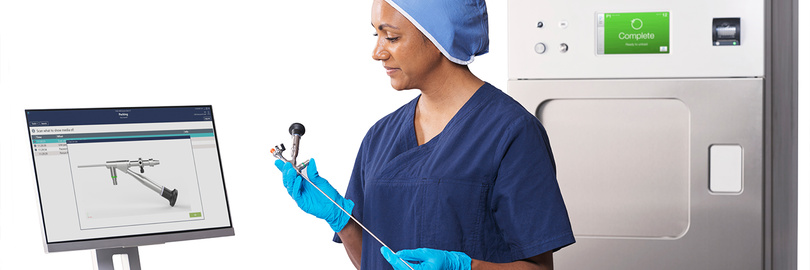
Low-temperature sterilization has become essential in modern reprocessing. As surgical instrumentation grows more delicate and device portfolios expand, CSSD teams are required to deliver high levels of safety and consistency – all while maintaining efficient, validated, and reproducible workflows.
At the same time, discussions around system architecture continue to influence technology evaluations. One recurring question in the field concerns the role of in-chamber plasma in vaporized hydrogen peroxide (VH2O2) sterilization systems. Plasma is often associated with added process benefits — particularly in areas such as temperature conditioning (for drying) and sterilant removal. But how accurate are these perceived advantages when tested under comparative conditions?
Looking beyond assumptions
At its core, VH2O2 sterilization relies on a chemical mechanism: vaporized hydrogen peroxide inactivates microorganisms at low temperatures. Whether plasma is integrated into the system design or not, the sterilant itself remains the same.
Where systems differ is in how they manage conditioning phases, sterilant distribution, and removal dynamics. These architectural choices may appear subtle — yet they can influence validation strategies, operational stability, service complexity, and long-term reproducibility.
In high-demand CSSD environments, such factors matter. Purchasing decisions are rarely based on features alone. They are shaped by questions such as how predictable cycle outcomes remain over time, how consistently process conditions are maintained under routine workload, and how manageable system complexity becomes in day-to-day operations.
Re-examining technical expectations
A recently published Getinge white paper takes a closer look at plasma-assisted and non-plasma VH2O2 sterilization approaches through structured R&D testing.
The analysis examined several widely discussed assumptions in the field:
- Pre-conditioning behavior: Controlled measurements showed no considerable difference in temperature development between plasma-assisted and non-plasma environments during conditioning phases.
- Hydrogen peroxide removal: Both approaches demonstrated comparable removal characteristics under defined test conditions.
- Chamber architecture effects: Internal components required for plasma generation influence surface exposure within the chamber, affecting how the sterilant interacts during the load.
- Sterilant concentration dynamics: Increasing the initial hydrogen peroxide concentration did not proportionally increase the effective concentration on the load. This indicates Increasing the initial H₂O₂ concentration yields diminishing returns because the final condensed concentration on the load does not differ considerably at standard operating temperatures.
The results indicate that some long-standing expectations around plasma-assisted systems may not translate into measurable advantages under controlled test conditions.
Conclusion
Selecting a low-temperature sterilization system requires more than comparing feature sets. It requires balancing validated performance, architectural design, operational complexity, and long-term process stability. In environments where reliability, reproducibility, and maintainability are critical, even subtle architectural differences can shape long-term operational stability. The comparative findings outlined in the white paper provide a structured, data‑driven foundation to support technology evaluation and decision‑making.
Upcoming Webinar: Plasma vs. Non-Plasma in VH2O2 Sterilization – What does the data show?
Join our upcoming webinar to explore the study findings in more detail, gain insight into the testing methodology, and discuss what the results mean for low-temperature sterilization in modern CSSD environments.