选择地区

为何需要高级血流动力学监测?

主题
重症监护
手术室
Getinge PiCCO Technology
主题
重症监护
手术室

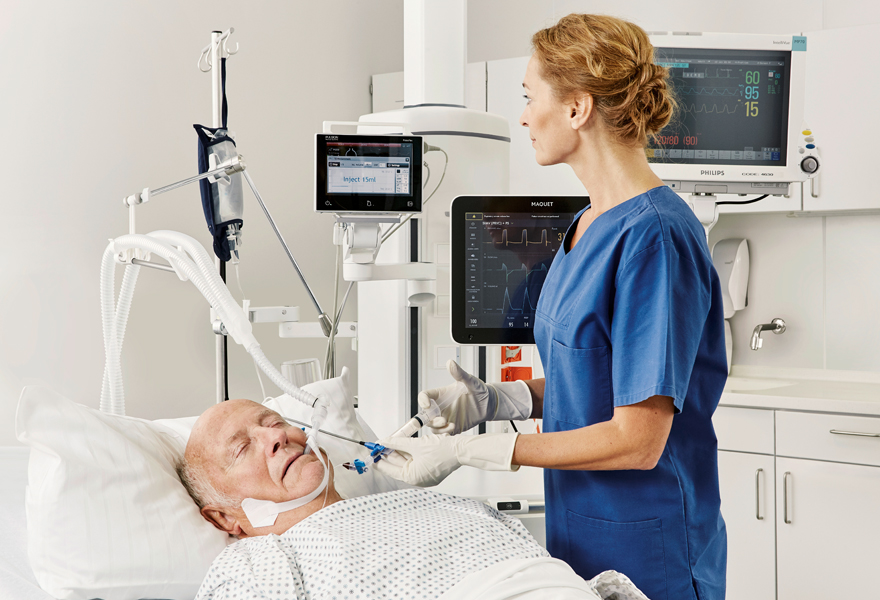
对于血流动力学不稳定的危重患者而言,其生命取决于对下一步治疗方案的正确决策。高级血流动力学监测有助于确定针对性强且个性化的治疗方案。

基础监测的局限性

监测心血管功能的生理参数是针对危重患者进行目标导向性管理的关键因素。

在由器官衰竭或重大手术引起的血流动力学不稳定情况下,基础监测会遇到局限。此类情况下,患者病情可能在极短时间内急剧恶化。为了对循环状况进行差异化评估,心电图、血压测量和脉搏血氧饱和度等标准参数已不足以可靠地评估心输出量(CO)和氧输送能力,从而无法为有针对性的个体化治疗提供依据。

通过高级血流动力学监测实现更精细的评估

高级血流动力学监测可提供关于心血管系统的额外且显著更精确的信息,例如血流、容量状态、血管张力和心脏功能。通过持续监测和分析动脉压力曲线的形状及其下面积(脉搏波形分析)、血管系统的结构和力学特性以及血液的物理特性,可随时对循环状况进行差异化评估,并启动针对性治疗。
此外,血管外肺水指数(ELWI)可实现肺水肿的床旁评估,从而便于早期治疗干预 [1] [2] [3]

高级血流动力学监测可解答以下问题:

  • 当前心血管状况如何?
  • 心室前负荷和后负荷如何?
  • 增加前负荷是否会导致心输出量升高(患者对补液有反应吗)?
  • 是否应给予液体或儿茶酚胺?
  • 是否存在液体过载的风险?
  • 患者是否正在发生肺水肿?

通过使用高级血流动力学监测,临床医生能够持续掌握患者病情的变化。因此,治疗方案可以立即进行针对性调整,并能针对患者个体情况,在最佳使用液体、正性肌力药物和血管活性药物的前提下实施治疗。临床证据早已表明,作为目标导向治疗(“早期目标导向治疗”,EGDT)组成部分的血流动力学优化,可降低并发症和发病率,缩短住院时间,并节省成本。[4] [5] [6]

适应症

在重症监护和麻醉领域,应用高级血流动力学监测的典型适应症包括:

  • 脓毒性休克
  • 急性呼吸窘迫综合征(ARDS)
  • 心源性休克
  • 重度烧伤
  • 多发性创伤
  • 胰腺炎
  • 高风险外科手术

经肺热稀释法和动脉脉搏轮廓分析的原则使这些高级血流动力学参数的计算成为可能,且已在临床中经过 20 多年的测试和验证 [7] [8]

  1. 1. Brown LM, Calfee CS, Howard JP, Craig TR, Matthay MA, McAuley DF. Comparison of thermodilution measured extravascular lung water with chest radiographic assessment of pulmonary oedema in patients with acute lung
    injury. Ann Intensive Care 2013; 3(1): 25.

  2. 2. Saugel B, Ringmaier S, Holzapfel K, Schuster T, Phillip V, Schmid RM, Huber W. Physical examination, central venous pressure, and chest radiography for the prediction of transpulmonary thermodilution-derived hemodynamic parameters in critically ill patients: A prospective trial. J Crit Care 2011; 26(4): 402-10.

  3. 3. Sakka S. G. et al., Assessment of cardiac preload and extravascular lung water by single transpulmonary thermodilution. Intensive Care Med 2000, 26(2): 180-187.

  4. 4. Salzwedel et al. Perioperative goal-directed hemodynamic therapy based on radial arterial pulse pressure variation and continuous cardiac index trending reduces
postoperative complications after major abdominal surgery: a multi-center, prospective, randomized study. Critical Care 2013;17:(191).

  5. 5. Grocott et al. Perioperative increase in global blood flow to explicit defined goals and outcomes after surgery: a Cochrane systematic review. British Journal of Anaesthesia. 2013;111(4):535-48.

  6. 6. Manecke, G.R., Asemota, A. & Michard. Tackling the economic burden of postsurgical complications: Would perioperative goal-directed fluid therapy help. Critical Care. 2014;18:(5):1–8.

  7. 7. Michard F. et al., Global end-diastolic volume as an indicator of cardiac preload in patients with septic shock. Chest 2003, 124(5): 1900-1908.

  8. 8. Adler C. et al., Fluid therapy and acute kidney injury in cardiogenic shock after cardiac arrest. Resuscitation 2013, 84(2): 194-199