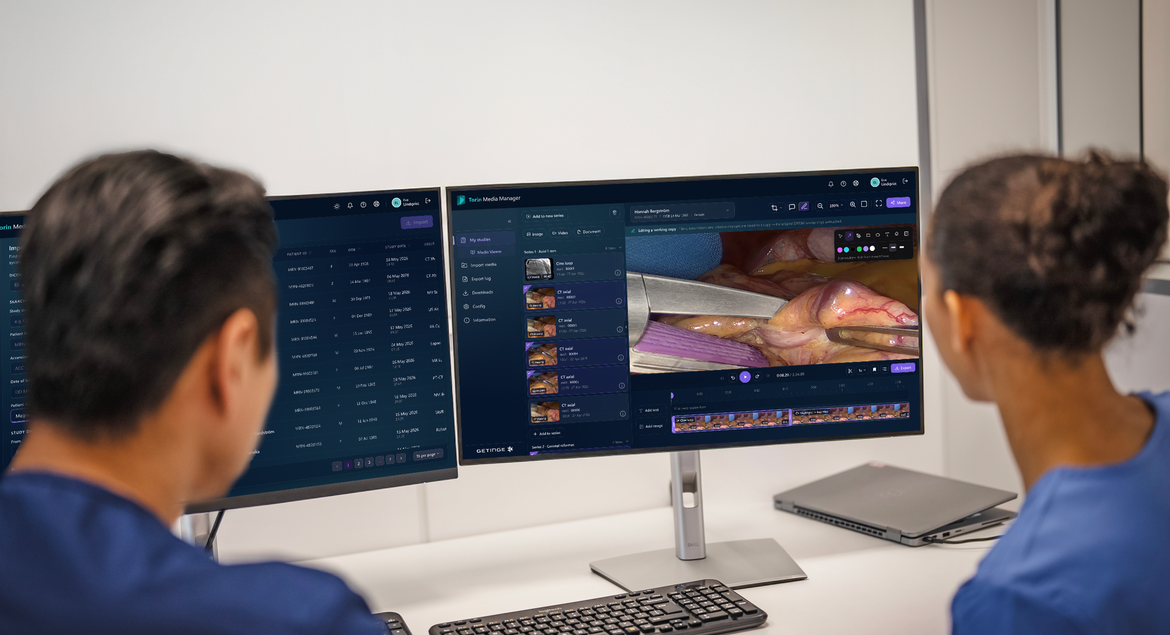
Surgical trainees today complete their training with significantly less operative exposure than the surgeons who trained them[1]. Recorded procedures offer a way to help close that gap, but only if they are used well. This article explores what the research says about learning from surgical video, what makes it effective, and what it takes to turn surgical recordings into a resource for continuous learning across a department.
Key findings on video-based surgical learning
10 of 15
trials showed significant skill gains with video coaching, across 382 trainees[1]
5 of 6
trials using coaching sessions of 20 minutes or more showed a significant benefit[1]
77.3%
of studies found a positive effect from video-based teaching, across 797 surgical learners[2]
63.6%
of studies showed statistically significant gains in knowledge or skills[2]
How video-based coaching improves surgical performance
A 2025 meta-analysis from the RCSI University of Medicine and Health Sciences in Dublin, Ireland, analysed 15 randomised controlled trials involving 382 participants, surgical residents and medical students, to measure the effect of structured video-based coaching on surgical performance[1]. The setup across the trials was consistent: trainees reviewed recordings of their own procedures with an expert coach, receiving individual feedback on their performance[1].
The results were substantial. Trainees who received video-based coaching outperformed controls in 14 of the 15 trials, with a statistically significant difference in ten[1]. Pooled across the trials, their performance scores were significantly higher than those of controls, a moderate-to-large effect by standard research measures. The improvement from baseline to final assessment was larger still[1]. The length of coaching sessions also appeared to matter: 5 of the 6 trials using sessions of 20 minutes or more showed a significant benefit, compared with only 1 of the 4 trials using shorter sessions, although the authors note that the optimal session length still needs to be confirmed[1]. The authors concluded that training bodies should now look at how best to formally integrate video-based coaching into conventional surgical training[1].
This finding does not stand alone. A 2023 systematic review from King’s College London, covering 22 studies and 797 participants, found that video-based teaching had a positive effect in 77.3% of the studies, including improvements in learner satisfaction, and that 63.6% produced a statistically significant improvement in knowledge or skills[2]. Two independent bodies of evidence, from separate research institutions and looking at different uses of surgical video, point to the same conclusion: structured engagement with recorded surgical video can measurably improve surgical performance[1][2].
Why surgical video is a powerful tool for surgical training
Surgical learning has always depended on observation. What recorded video changes is when and how that observation can happen[2]. A surgeon who was not present for a procedure can study it afterwards. A trainee preparing for a complex case can watch three comparable procedures performed by different colleagues beforehand. A team reviewing a challenging outcome can anchor the discussion to a specific moment in the recording rather than relying on individual recollections.
The research points to what makes the difference: the ability to pause, rewind and focus on a specific moment[2], and to revisit it with structured feedback from an expert[1]. This is what separates learning from recorded surgical video from a verbal debrief or a case discussion from memory. The review is anchored to what actually happened. The feedback is specific[1]. And the learning is available to anyone with access to the recording, not only the people who were in the room[2].
That last point is critical. When surgical video is accessible beyond the operating room where it was captured, the learning audience expands from the team present during the procedure to every clinician who could benefit from reviewing it[2]. A single recording can serve individual reflection, peer coaching, resident training, and departmental case review.
What makes recorded surgery valuable for learning
Turning surgical recordings into learning resources
Many hospitals already record surgical procedures. The gap is not in capture. It is in what happens afterwards. In many hospitals, recorded media stays on the operating room’s local system. It is not easily searchable, not structured for review, and not accessible from the settings where learning actually takes place: the teaching session, the case conference, the coaching conversation, the trainee’s own preparation time[2].
Three conditions turn a recording into a learning resource: the media must be accessible outside the room where it was captured, review tools must support structured interaction with the recording such as bookmarks, clips, and annotations, and a workflow must connect the recorded material to a learning activity. The research shows why these matter: learners value control over how they review video[2], and coaching works when a recording can be reviewed together with an expert[1]. When all three are present, the learning effect the research describes can operate at scale. When any one is missing, the recording remains a stored file rather than a learning input.
Making surgical video accessible across the hospital
Video-based surgical learning today happens in pockets[1]. A motivated surgeon seeks out a recording. A department head organises a case review around a specific procedure. A training programme incorporates video into a simulation session. These are valuable, but they depend on individual effort and tend not to scale.
The shift the evidence points towards is institutional: making recorded surgical media systematically accessible, structured for review, and connected to the learning activities clinicians already engage in[1][2]. This often does not require new recording hardware or new data. It requires infrastructure that routes what hospitals already capture to a place where it can be found, reviewed, and used by anyone authorised to learn from it.
From isolated efforts to institution-wide learning
Not yet routine
Video-based coaching is still used only sparsely in surgical training, and its role in future training remains unclear[1]
What this means for surgical departments
In practice, the findings point to clear opportunities for surgical departments. Recordings of a trainee’s own procedures can become the basis for structured coaching with experienced colleagues[1]. Instructional recordings can help clinicians prepare for a procedure and revisit key steps at their own pace[2]. And because a recording isn’t limited to the people who were in the room, the same material can support case discussions and knowledge sharing across the wider team[2].
Realising that value depends on making surgical media accessible: easy to find, review and discuss wherever learning takes place. For surgical departments and hospital leadership, making recorded procedures accessible across the department is a practical step towards turning the procedures they already perform into a lasting resource for continuous learning.
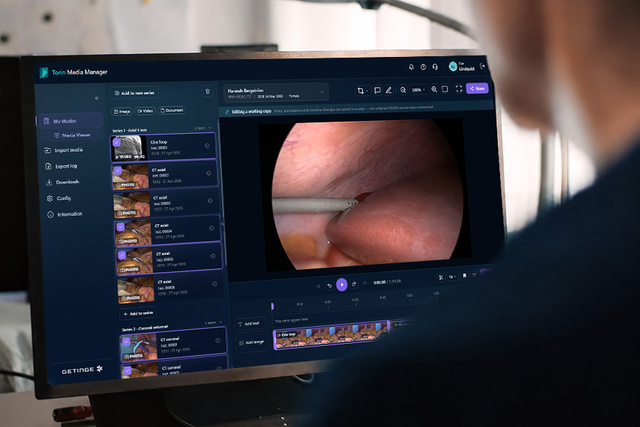
Torin Media Manager
Turn surgical media into continuous improvement
Every procedure generates surgical media that can strengthen consistency, precision and clinical insight over time. Torin Media Manager gives your department instant access to surgical recordings, images and documents, so that data becomes a resource for continuous learning.
It helps surgical teams to:
- Review surgical cases after procedures
- Capture, clip and share key moments
- Import and export media across systems