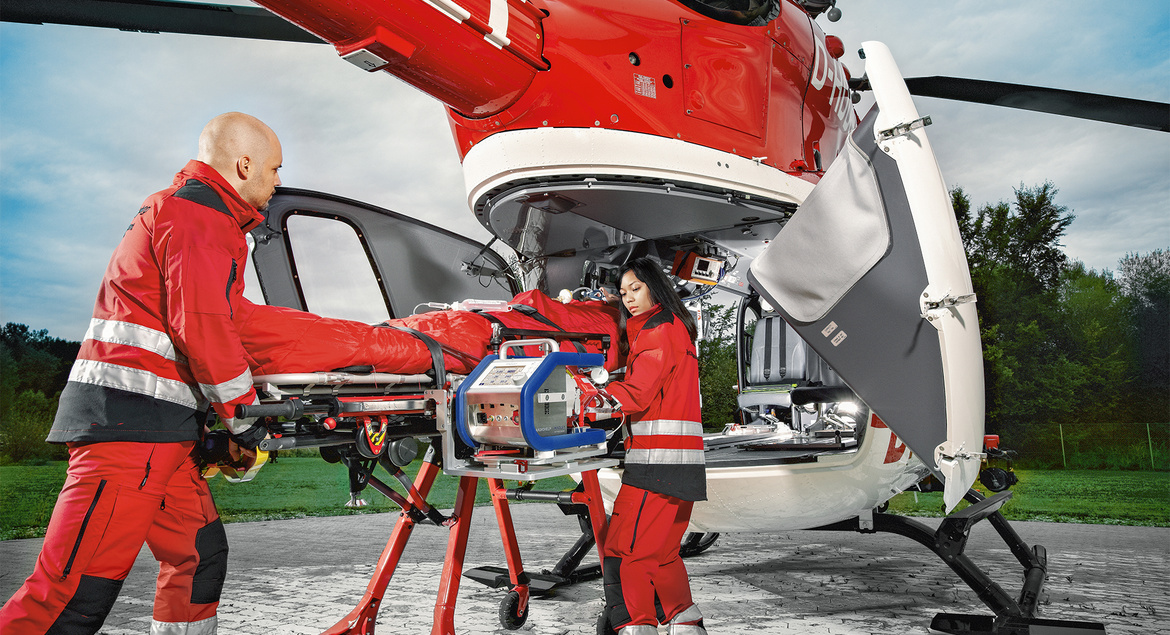
Over the past two decades, extracorporeal membrane oxygenation has undergone a remarkable transformation. Advances in mobility, system integration, and clinical experience have expanded where and how ECMO can be used — changing its role from a highly specialized stationary intervention into a widely applicable form of life-sustaining support in modern critical care. In this development, the introduction of Getinge’s Cardiohelp marked a defining moment. Beyond enabling mobility, it influenced expectations around usability, monitoring transparency and integrated system design — aspects that would go on to shape many ECMO programs worldwide.
Looking back at this evolution offers more than a historical perspective. It highlights how clinical practice, technology and interdisciplinary collaboration have progressed together — and why this legacy matters as ECMO continues to evolve further.
Pandemic as catalyst: ECMO moves into intensive care reality
The broader adoption of ECMO in intensive care was accelerated by an unexpected catalyst: the H1N1 influenza pandemic of 2009. Although extracorporeal support already existed, it was still largely confined to specialized centers and not yet a routine option for many hospitals.
Faced with patients suffering from severe respiratory failure and limited therapeutic alternatives, clinicians began to use ECMO pragmatically — despite the still limited clinical evidence at the time. What initially emerged as a response to crisis soon demonstrated its potential. For many patients, extracorporeal lung support provided a bridge through otherwise fatal respiratory failure.
The experience gained during H1N1 marked a turning point. ECMO began to move from a highly specialized rescue technique toward becoming an increasingly accepted component of modern intensive care practice.
Mobility transforms clinical applicability
A major milestone followed in 2010 with the introduction of Getinge’s Cardiohelp. For the first time, extracorporeal support could be maintained not only for prolonged ICU therapy, but also during interhospital and intrahospital transport by ground or air — without interrupting circulatory or respiratory assistance.
“When Cardiohelp entered the market, it was the smallest and lightest ECMO device available at the time — but the real innovation went beyond size. It integrated monitoring functions such as pressure sensing directly into the system and was designed specifically for intensive care use rather than adapted from perfusion technology. This combination made extracorporeal support far more practical for clinical teams”, says Christian Schmoll, Manager Global Clinical Marketing at Getinge.
With regulatory approval for support durations of up to 30 days and true transport capability, ECMO evolved from a stationary rescue technology into a mobile, continuous life support modality. This significantly expanded its clinical applicability and supported its integration into modern critical care worldwide.
When systems like Cardiohelp became available, ECMO stopped being an exceptional rescue option and started to become a realistic therapeutic pathway. What changed was not only mobility, but our confidence in managing the therapy — we could monitor it more transparently, integrate it into ICU workflows, and ultimately offer it to more patients.
Prof. Dr. Philipp Lepper, Director of the University Clinic for Internal Medicine, Pneumology, and Internal Intensive Care Medicine, Evangelisches Klinikum Bethel (EvKB) in Bielefeld, Germany
ECMO at scale: COVID-19 pandemic
The COVID-19 pandemic demonstrated ECMO’s role in modern critical care at an unprecedented scale. In many centers, it became an essential life-support option for patients with refractory ARDS, with devices like Cardiohelp running continuously worldwide.
Reliable performance, continuous operation, and transport capability proved essential for managing patient flow, referral networks, and interhospital transfers under extreme conditions. The development of dedicated ECMO centers and regional networks further enabled safe and effective use at scale, reinforcing ECMO’s role in severe respiratory failure beyond pandemic situations.
ECMO beyond conventional intensive care
Today, ECMO is no longer limited to static ICU environments. In specialized centers, extracorporeal support is integrated into advanced treatment pathways, including severe ARDS management, transport medicine and extracorporeal cardiopulmonary resuscitation (eCPR).
The importance of structured programs
Successful ECMO therapy relies on more than technology alone. Standardized training, interdisciplinary collaboration, and continuous quality development are essential for safe extracorporeal care. Modern ECMO programs combine technical expertise with education, simulation training, clinical exchange and ongoing support, enabling teams to manage complex situations and continuously refine their practice.
Looking ahead: the next generation
Getinge has contributed to the development of extracorporeal membrane oxygenation for over 20 years. Over time, Cardiohelp has become closely associated with the evolution of ECMO programs worldwide, reflecting how extracorporeal support has moved from isolated rescue intervention to a structured component of modern critical care.
We cannot determine the exact number of patients treated, but more than 250,000 HLS sets have been supplied for use with Cardiohelp worldwide. That suggests that hundreds of thousands of patients have been supported with extracorporeal life support. What matters most is not the number itself, but what it represents — access to life-saving therapy for patients who previously had no options.
Christian Schmoll, Manager Global Clinical Marketing at Getinge
Prof. Dr. Lepper: “Over the years, several ECMO technologies have emerged, but Cardiohelp has remained the platform I trust most in my clinical work. Its consistency, transparency and integration into ICU practice have supported our team from the very beginning — and that trust continues to guide our choice of system today.”
Building on this experience, the next phase of extracorporeal support is already taking shape — informed by years of clinical practice, interdisciplinary collaboration, and the shared goal of making life-sustaining therapy safer, more accessible, and more integrated into everyday intensive care.
From clinical evolution to individual outcomes
Behind every development in extracorporeal support are the patients whose lives it helps sustain. This case story follows a woman, who survived a cardiac arrest during a snowstorm and received extracorporeal support with Cardiohelp in Barcelona. Her recovery without neurological impairment illustrates how advances in ECMO care translate into real outcomes for individual patients.