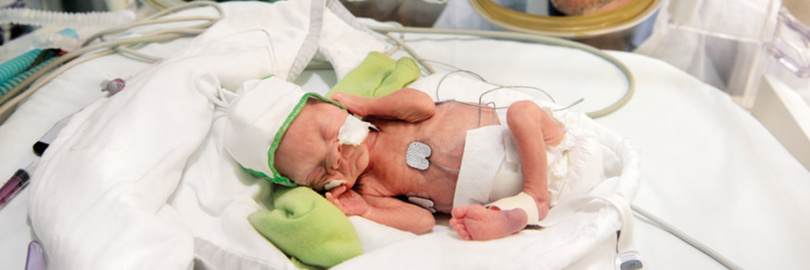
Individually personalized ventilation
Respiratory failure is one of the main reasons for admission to neonatal and pediatric intensive care units. Many patients experience complications related to mechanical ventilation.
Therefore, there is a general trend toward a gentler ventilation approach that can reduce adverse effects such as ventilator-associated pneumonia (VAP) and ventilator-induced lung injury (VILI).
Non-invasive ventilation (NIV) aims to minimize these complications while supporting the patient's own breathing. However, it is particularly challenging to adapt NIV to the needs of infants and children: small tidal volumes and high respiratory rates, especially in the presence of leaks, disrupt the synchrony between the patient and the ventilator. Leaks also lead to unreliable monitoring of respiratory drive and respiratory rate.
To address these challenges, Edi monitoring and the concept of neurally adjusted ventilatory assist (NAVA) were developed. With NAVA, the patient’s own neural respiratory drive is used to control the ventilator.
The advantages of neurally controlled ventilation
With NAVA and NIV NAVA, newborns can control their own ventilation. By using the neural respiratory drive, it is not the ventilator but the patient who determines the initiation and termination of each breath, as well as the breath size, inspiratory time, respiratory rate, and peak pressure. The result is improved synchronisation between the ventilator and the patient, both during invasive and non-invasive ventilation with nasal masks or nasal prongs (NIV NAVA).
Studies demonstrate that newborns supported with NAVA and NIV-NAVA show: