The evolving challenge of endoscope reprocessing
Flexible endoscopes are among the most complex reusable medical devices in a hospital. Their intricate channel designs, sensitive materials, and high patient contact risk place exceptional demands on reprocessing. They require validated cleaning and reprocessing processes that follow both the endoscope manufacturer’s instructions for use and applicable infection-prevention guidance.
At the same time, procedure volumes continue to rise, and regulatory scrutiny around infection prevention is intensifying. This comes with strict requirements for audit trails and documentation, alongside rising expectations for environmental sustainability.
These conditions are reshaping how endoscope reprocessing is organized and managed. “In sterile reprocessing, the CSSD and the endoscopy department are two pillars of the hospitals that are more connected than ever”, notes David Martinez Hernandez, Global Business Development Manager – Low Temperature / Infection Control.
Automated endoscope reprocessors as workflow systems
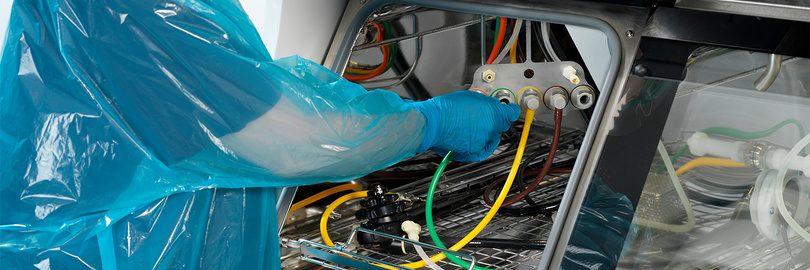
To address this complexity, hospitals are increasingly relying on automated and standardized reprocessing solutions. Automated Endoscope Reprocessors (AERs), combined with controlled drying, storage, and digital traceability, support structured workflows rather than isolated process steps. As part of an end-to-end reprocessing pathway, these systems support the consistent execution of validated processes. Appropriately trained personnel and the required manual steps defined by endoscope instructions for use and facility protocols remain essential.
Automated systems control and document critical parameters such as time, temperature, flow, and chemistry. Safety mechanisms – including continuous leak testing, monitored channel connections, and interlocking doors – reduce dependence on manual checks. User and endoscope identification supports correct process allocation and automated documentation.
Beyond disinfection: continuity, traceability, and control
Reprocessing workflows extend beyond the disinfection or sterilization step. They typically include point-of-use handling, transport, pre-cleaning, validated cleaning, rinsing, controlled drying and storage under defined conditions, as well as endoscope lifecycle documentation. “Once we reprocess the endoscope, the journey is not complete yet. Drying and storage are equally crucial”, explains Hernandez. Controlled drying and storage address residual moisture as a known risk factor and ensure that endoscopes remain under validated conditions until use.
Digital traceability connects all steps across the lifecycle. Documentation supports audit readiness by recording endoscope identity, validated reprocessing cycle outcomes and key parameters, drying and storage configuration and duration, as well as repair and reprocessing events. Traceability can be integrated into the workflow through data capture to support consistent reporting while preserving clinical oversight and responsibility.
Where required, vacuum packaging and low-temperature sterilization extend this controlled approach to heat-sensitive endoscopes.
Environmental considerations are increasingly integrated into these systems. They are designed to optimize resource use by reducing water consumption, chemical usage, energy demand, and cycle time while maintaining validated infection-prevention performance.
Reprocessing as an integrated system
Endoscope reprocessing today is not defined by a single device or step. Instead, it is a system comprising automated reprocessors, controlled water and chemistry management, validated drying and storage, digital traceability, and trained users operating within standardized workflows. The overall effectiveness of the system depends on validated processes, adherence to endoscope instructions for use, trained personnel as well as ongoing monitoring and verification in routine operations.