How EVH teams use game-based training to practice coordination and instrument control
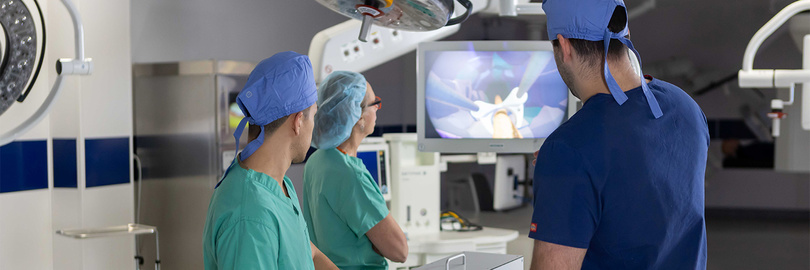
Catching virtual rabbits and butterflies may not sound like serious surgical training. But a recent Dutch TV episode from Stand van Nederland: Wereld op Scherp showed this game-based exercise as part of surgical training at UMC Utrecht. Behind the playful interface is a serious objective: training the coordination, screen-based orientation, and instrument control required for Endoscopic Vessel Harvesting (EVH).
Game-based training is helping EVH teams develop these skills before entering the operating room, allowing clinicians to build confidence and procedural consistency in a safe training environment.
Why EVH requires specific skills
EVH is a minimally invasive technique used to harvest veins and/or radial artery for coronary bypass surgery. Instead of creating a long incision along the leg or arm, the vessel is harvested endoscopically through small access points using an endoscopic camera and dedicated harvesting systems such as Vasoview Hemopro 2 from Getinge. Chiara Krebs, OR nurse with surgical skills, explains: “If you needed a 30 cm vein, you made a 30 cm incision. Nowadays we only need two small incisions.”
The clinical advantages of EVH compared to open harvesting are well known, including smaller wounds and reduced recovery burden for patients.[1] At the same time, the procedure requires a very specific set of technical skills. Operators work indirectly while focusing on a monitor rather than their hands. Movements must remain controlled and precise within a confined anatomical space. “You see my hands working, but I focus on the screen. You have to learn to use your hands blindly,” says Chiara Krebs. This coordination between instrument handling and screen visualization is one of the reasons EVH can be difficult to learn. Repetitive practice during live procedures is naturally limited, while vessel quality depends heavily on careful tissue handling.
Practicing movements outside the OR
The TV segment highlighted a challenge familiar to many EVH programs: How can clinicians safely develop the coordination and instrument control required for minimally invasive vessel harvesting before performing procedures on patients?
At UMC Utrecht, clinicians use Getinge's GetPlaying EVH training game to train exactly these types of movements while incorporating elements of gamification. This approach is often referred to as "serious gaming" – the use of game-based environments for educational and professional skill development. Exercises focus on navigation, hand-eye coordination, and movement control while working through a visual interface. During training, users receive direct feedback on how efficiently they move.
One exercise involves following and catching virtual rabbits and butterflies with the instrument while tracking movement counts and overall scores. „I still find it incredible that you can play a game and apply it to a real human body”, describes Rianne Rijsdijk, Physician Assistant at UMC Utrecht, the connection between game-based training and clinical practice.
The goal is not speed, but smoother and more controlled instrument handling. “The idea is to practice calmer and fewer movements. That is better for the patient because it causes less damage,” explains Rianne Rijsdijk. The approach also allows clinicians to repeat movements many times before performing them in the OR. “Instead of practicing on patients, you can train in a safe environment.”
From game-based training to clinical routine
At UMC Utrecht, EVH has now been part of clinical routine for ten years, with around 3,000 procedures performed. Over time, interactive training has become increasingly integrated into the learning process. At the same time, clinicians emphasize that simulation and game-based training do not fully replace real surgical experience. Tissue resistance, smoke generation, and the responsibility of operating on a patient remain part of the real procedure.
Still, becoming familiar with the instrument movements beforehand can make the transition into clinical practice easier. “The game helps to become familiar with the movements of the instrument,” says Rianne Rijsdijk.
With Getinge's GetPlaying EVH training game, clinicians can repeatedly practice screen-based navigation, hand-eye coordination, and instrument control outside the clinical setting. Especially in minimally invasive procedures such as EVH, this combination of repetition, feedback, and gamification may help teams build procedural confidence and consistency earlier in the learning curve.
As minimally invasive techniques continue to evolve, game-based training is becoming an increasingly valuable part of surgical education. By combining repetition, objective feedback, and gamification, EVH teams can develop procedural confidence and consistency earlier in the learning curve – before stepping into the operating room.