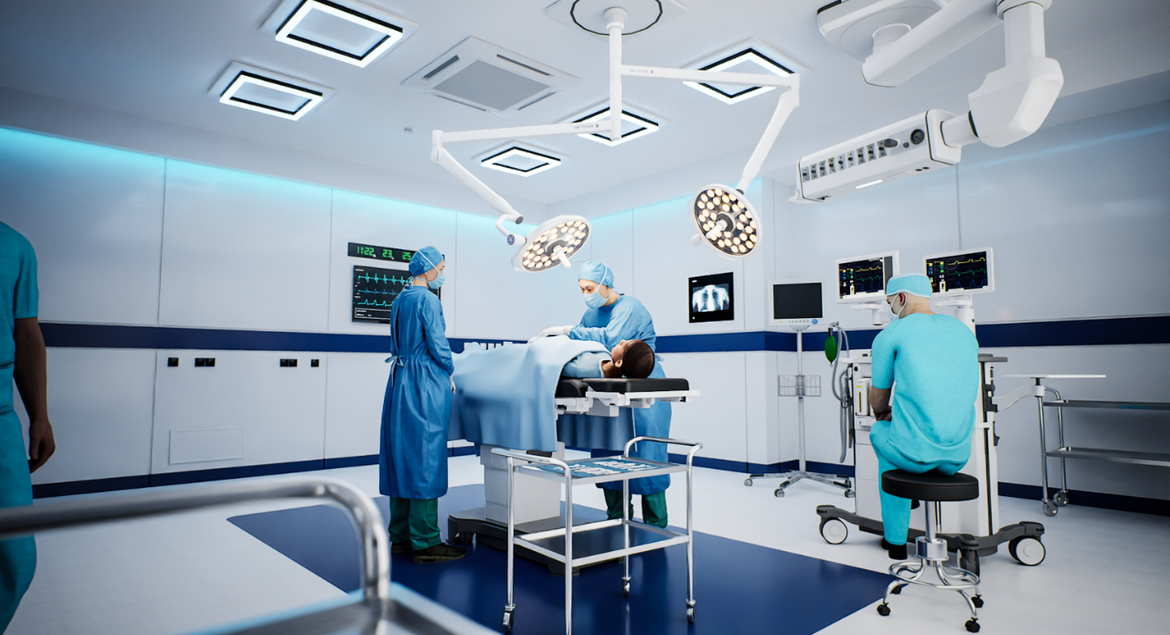
Why perioperative safety in ASCs now begins long before the first case of the day
Most ambulatory surgery center leaders can tell you exactly how many cases they ran yesterday, their on-time start percentage, turnover time, and infection rates. These are familiar performance indicators: the metrics that live on dashboards, inform staffing models, and guide operational decisions.
What most ASCs cannot easily answer is a different question:
Which risks in our perioperative workflow are we carrying today that aren’t visible on any KPI dashboard?
That blind spot is becoming harder to ignore. Recent changes in regulatory standards are redefining perioperative risk in ways that extend well beyond the procedure itself into the infrastructure, equipment, and environmental systems that support every case.
Individually, these changes may look manageable. Collectively, they signal something far more consequential. Perioperative risk is being pushed upstream, and accountability is following it.
Some of the most significant risks in today’s ASC aren’t clinical, and they aren’t tracked. They’re embedded in infrastructure that’s assumed to be neutral.
Brian Schaeffer, Director of Quality & Regulatory Compliance at Getinge
The familiar risks and the blind spots
ASC leaders are highly disciplined about managing visible risks: surgical site infections, staffing variability, supply availability, payer pressure, and throughput constraints. These risks are tangible, measurable, and operationalized.
What’s far less common is proactive scrutiny of whether capital infrastructure itself is introducing variability or exposure into the perioperative workflow.
Few ASCs routinely ask:
- Does our surgical lighting actively support visual precision throughout long cases and late days?
- Do our OR tables prevent foreseeable movement and collision risks, or do they rely on perfect human execution?
- Is water quality in sterile processing validated as a clinical input, or assumed based on municipal supply?
- Are staff compensating for system limitations through workarounds that never appear in reports?
Historically, these questions weren’t front-and-center. Infrastructure was treated as static - installed once, maintained periodically, and presumed safe unless something failed.
When standards change, risk changes, whether you planned for it or not
Over the past two years, multiple regulatory and standards bodies have redefined how perioperative environments are evaluated not just for function, but for risk anticipation and system behavior.
The FDA’s national safety communication on electrical surgical tables reframed tipping, collision, and overload events as foreseeable system hazards, not isolated user error.
IEC 60601-2-41 Edition 3 elevated surgical lighting to a critical safety system, introducing requirements around depth of illumination, homogeneity, thermal safety, and single-fault recovery -metrics tied directly to human performance and patient protection.
ANSI/AAMI ST108 established formal governance over water quality in medical device processing, positioning water as a clinical variable, with defined roles, testing protocols, and documentation expectations
Each standard addresses a different component of the perioperative environment. Together, they deliver a consistent message: risk is no longer defined solely by what happens during surgery, but by how well systems anticipate real-world conditions before the patient arrives.
Regulators are no longer asking whether equipment works. They’re asking whether systems fail in predictable ways - and whether those failures were preventable.
Brian Schaeffer, Director of Quality & Regulatory Compliance at Getinge
When standards change, risk changes, whether you planned for it or not
Over the past two years, multiple regulatory and standards bodies have redefined how perioperative environments are evaluation not just for function, but for risk anticipation and system behavior.