Getinge brings its smallest Edi catheter to the U.S. market following FDA clearance
New catheter extends NAVA-supported care to some of the smallest patients in neonatal intensive care, weighing between 500 and 1,000 grams.
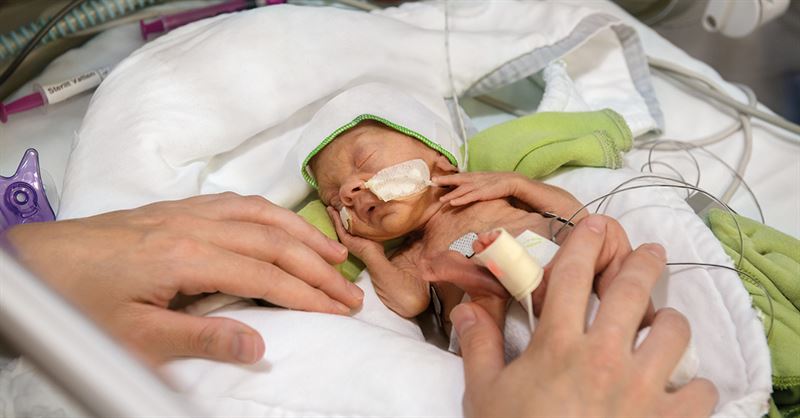
Getinge has received U.S. Food and Drug Administration (FDA) 510(k) clearance for a new 6Fr/48 cm Edi catheter designed for premature infants weighing between 500 and 1,000 grams. Already available in markets outside the United States since 2025, the catheter will now be introduced to the U.S market, where more than 350,000 babies are born prematurely each year, including over 22,000 infants classified as extremely low birth weight.1
The Edi catheter is used together with Getinge's Neurally Adjusted Ventilatory Assist (NAVA) technology. By measuring electrical activity of the diaphragm (Edi), the catheter enables ventilator support to be synchronized with a patient's own breathing efforts.
The smaller catheter enables clinicians to use NAVA with some of the most fragile patients in neonatal intensive care, supporting personalized respiratory care during a critical stage of development.
"The smallest babies often have the most complex respiratory needs," said Elin Frostehav, President Acute Care Therapies at Getinge. "This clearance allows us to bring our latest Edi catheter to hospitals across the U.S. and support clinicians caring for extremely premature infants. By expanding the range of patients who can benefit from NAVA, we can help deliver more personalized respiratory support to some of the most vulnerable patients in healthcare."
The Edi catheter functions as both a feeding tube and a tool for detecting electrical activity of the diaphragm, allowing clinicians to monitor breathing effort and use NAVA therapy with compatible Getinge Servo ventilators.
"Caring for extremely low birth weight infants requires therapies that can be adapted to each patient's individual needs," said Dr. Miray Kärnekull, Medical Director, Critical Care at Getinge. "The addition of this smaller catheter gives clinicians the ability to use established NAVA technology with even smaller babies than before. This contributes to optimized patient-ventilator synchrony while expanding access to personalized respiratory support for a particularly vulnerable patient population."
Getinge expects the new catheter to become available in the U.S. by the end of 2026.
Find out more about Getinge’s NAVA solutions >>
1. National Vital Statistics Reports Volume 75, Number 2 June9 2026.National Vital Statistics Reports Volume 75, Number 2 June 9, 2026
Media contact:
Caroline Örmgård, Head of Media Relations
Phone: +46 (0)10 335 0041
Email: caroline.ormgard@getinge.com
About Getinge
With a firm belief that every person and community should have access to the best possible care, Getinge provides hospitals and life science institutions with products and solutions aiming to improve clinical results and optimize workflows. The offering includes products and solutions for intensive care, cardiovascular procedures, operating rooms, sterile reprocessing and life science. Getinge employs approximately 12,000 people worldwide and the products are sold in more than 135 countries.